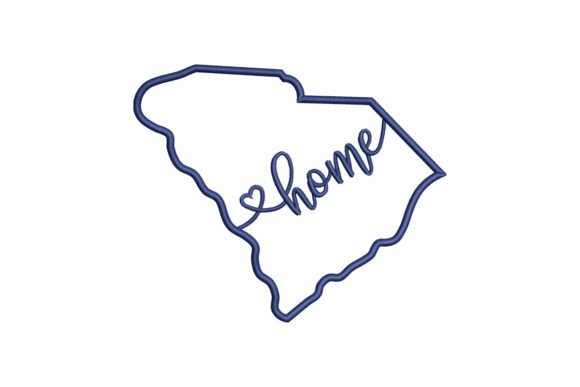
South Carolina State of America Embroidery Review
As an embroidery designer who has spent years turning digital concepts into tangible, stitched realities for small businesses, I approach every new design file with a critical eye. It is not enough for a design to simply look good on a screen; it must perform flawlessly under the needle, hold up to washing, and elevate the brand it adorns. Today, I am reviewing the South Carolina State of America machine embroidery design. This piece is marketed as a minimalist yet stunning option suitable for clothing, accessories, pillows, framed art, and décor. But does it translate effectively into the world of small business merch and branded merchandise?
This review focuses on the practical application of this embroidery file for entrepreneurs, Etsy sellers, apparel decorators, and creative studios. We will evaluate its visual personality, its suitability for various commercial applications, and the technical considerations necessary before you commit to production.
First Impressions: Visual Personality and Brand Fit
The title South Carolina State of America suggests a strong regional pride combined with a broader national identity. The description highlights a "minimalist" aesthetic, which is currently one of the most sought-after styles in the handmade and boutique markets. Minimalism in embroidery often signals premium quality because it relies on clean lines and negative space rather than cluttered details.
From a design perspective, this feels like a versatile asset. It strikes a balance between rustic charm and modern elegance. For a local café or bakery in South Carolina, this design could serve as a warm, welcoming accent that honors local roots while appealing to tourists seeking authentic souvenirs. For a more corporate entity, such as a law firm or real estate agency based in the state, the clean lines project professionalism and stability. The design is neither overly playful nor strictly formal, making it a safe yet stylish choice for broad audience appeal.
Real-World Business Applications
When evaluating a digital embroidery file for commercial use, I look at where it can live on a product. The South Carolina State of America design offers several high-value opportunities for small business owners.
Branded Patches and Uniforms
One of the strongest use cases for this design is the creation of embroidered patches. Whether for staff uniforms at a local florist, pet brand, or creative studio, a chest logo adds immediate credibility. The minimalist nature of the design ensures that it remains legible even when scaled down to a standard patch size. It works exceptionally well as a left-chest accent on work shirts or polo uniforms, providing a subtle nod to location without overwhelming the garment’s primary branding.
Caps and Headwear
Cap embroidery is a staple in promotional merchandise. The structured front panel of a baseball cap provides a perfect canvas for this design. Because the aesthetic is clean, it avoids the "cluttered" look that can sometimes occur on curved surfaces. This makes it ideal for custom hats sold at farmers' markets, craft fairs, or as giveaways at local events.
Tote Bags and Aprons
For makers selling physical goods, adding value through branded packaging is crucial. A tote bag design featuring this motif appeals to the eco-conscious consumer who values sustainability and local identity. Similarly, apron embroidery for bakers, chefs, or artisans allows the business owner to wear their brand proudly. The design’s versatility means it pairs well with both dark and light fabric backgrounds, provided the thread colors are chosen carefully.
Framed Art and Décor
The description mentions framed embroidery art. In the era of social media, visually pleasing home décor sells well. This design can be mounted in simple wooden hoops or frames, targeting customers who want to display their state pride in a sophisticated manner. It serves as a great gift item for holidays or housewarmings, expanding your product line beyond wearable apparel.
Strategic Considerations and Cautionary Zones
While the design shows promise, no single file fits every scenario perfectly. As a professional, I advise caution in specific areas to ensure customer satisfaction and reduce returns.
- Small Patch Sizes: If you plan to stitch this onto very small patches (under 2 inches), you must inspect the fine details. Minimalist designs often rely on thin lines that can merge together if the stitch density is too low or the scale is too small.
- Curved Surfaces: When stitching on items like beanies or fitted caps, the curvature can distort straight lines. Always test on the actual product material to ensure the geometry holds.
- Dark Uniforms: If embroidering on dark fabrics, contrast is key. Ensure you have appropriate bright or metallic thread options available to make the design pop against navy, black, or charcoal backgrounds.
- Frequent Washing: For items like aprons or work shirts that undergo frequent laundering, check the stability of the stitches. Loose threads or poor backing can lead to fraying over time, damaging the brand’s reputation.
Impact on Brand Identity and Customer Trust
In the crowded marketplace of online commerce, visual consistency builds trust. Using a high-quality, professionally digitized design like South Carolina State of America signals that you care about the details. Customers associate neat, precise embroidery with overall product quality.
Furthermore, regional designs foster community engagement. A handmade product that celebrates local heritage resonates emotionally with buyers. It transforms a simple commodity into a story-driven item. When a customer sees a beautifully stitched brand identity element on a tote or cap, it enhances the perceived value of the item, allowing you to command higher prices and build stronger loyalty.
Practical Designer Notes for Production
Before you begin mass production, follow these essential steps to ensure success:
- Test in Black and White: Convert the design to monochrome to check contrast and spacing. This helps identify any areas that might become muddy when stitched.
- Check Small Scale Legibility: Zoom out or stitch a miniature version to see if the text and graphics remain distinct.
- Review Thread Color Contrast: Select thread colors that complement your target fabric. High contrast usually yields the best results for minimalist designs.
- Inspect Spacing and Density: Ensure there is adequate space between elements to prevent thread breaks and maintain a clean finish.
- Confirm Hoop Size: Verify that the design dimensions fit within your machine’s hoop capabilities, especially if you are using smaller hoops for detailed work.
- Test on Real Fabric: Never skip the sample run. Stitch on the actual material you intend to sell to assess how the fabric texture interacts with the stitches.
- Use Proper Stabilizer: Choose the correct stabilizer (cut-away, tear-away, or wash-away) based on the fabric type to prevent puckering.
- Create a Printable Mockup: Use digital mockups to present the design to clients or for marketing purposes before committing to physical production.
- Compare Design Assets: Place this design beside other logos or elements to ensure visual harmony across your product line.
- Confirm Commercial Licensing: Most importantly, verify that you have the right to use this commercial embroidery design for resale. Check the license terms associated with the South Carolina State of America file to avoid legal issues.
In conclusion, the South Carolina State of America embroidery design is a strong candidate for small business merchandise. Its minimalist beauty and regional appeal make it suitable for a wide range of products, from custom apparel to home décor. By following proper testing protocols and considering the specific needs of your brand, you can leverage this design to create memorable, high-quality products that resonate with your customers.